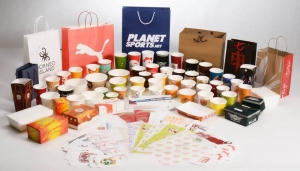

什么是纸杯? 生物堆肥一次性生态纸杯,
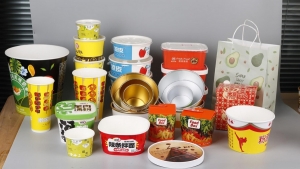
纸杯是由纸板制成的一次性容器, 设计用于容纳和盛放热饮和冷饮.
以下来自互联网的信息副本.
什么是纸杯?
纸杯是由纸板制成的一次性容器, 设计用于容纳和盛放热饮和冷饮.
使它们防水, 纸张内侧涂有防水材料, 例如一层薄薄的塑料 (聚乙烯) 或蜡.
它们广泛用于咖啡店和餐馆的外卖服务, 在办公室, 以及在聚会和活动期间.
结构及特点
绝缘: 有些纸杯有双层或波纹壁,以提供更好的隔热效果. 这样可以使热饮保持温暖并保护双手免受高温.
涂层: 内衬可防止杯子受潮. 历史上, 这是蜡, 但许多现代杯子使用聚乙烯 (聚乙烯醇) 或者, 更多环保选择, 聚乳酸 (PLA). 较新, 还正在开发无塑料涂料以提高可回收性.
盖子: 热饮纸杯通常配有塑料盖,以防止溢出并保持饮料热度. 这些盖子设计有一个小开口,用于啜饮.
定制化: 品牌可以在纸杯上打印徽标和图案以用于营销目的.
历史
古代使用: 纸杯, 称为芝佩, 自 2 世纪中国帝制以来就已存在,用于盛茶.
现代发展: 现代的, 一次性纸杯于20世纪初在美国普及.
公共卫生问题: 从公共玻璃杯到一次性杯子的转变是由公共卫生运动推动的, 其中强调了公共场所共用饮水器皿中细菌的传播.
迪克西杯: 最著名的早期品牌之一是 “健康库普,” 后来更名为 “迪克西杯,” 由劳伦斯·鲁伦 (Lawrence Luellen) 和休·摩尔 (Hugh Moore) 开发,与自动售水机一起使用.
环境影响和回收
挑战: 许多纸杯的塑料衬里使其难以在标准纸张回收设施中回收, 它们往往最终被扔进垃圾填埋场.
较新的解决方案: 一些制造商正在通过使用更容易回收的涂料来解决这个问题, 或者通过制造在适当条件下完全可生物降解或可堆肥的纸杯.
环境权衡: 与可重复使用的容器相比, 一次性纸杯的制造仍然消耗大量能源和资源,并造成浪费. 然而, 它们通常被认为比一次性塑料或泡沫杯更环保的选择.
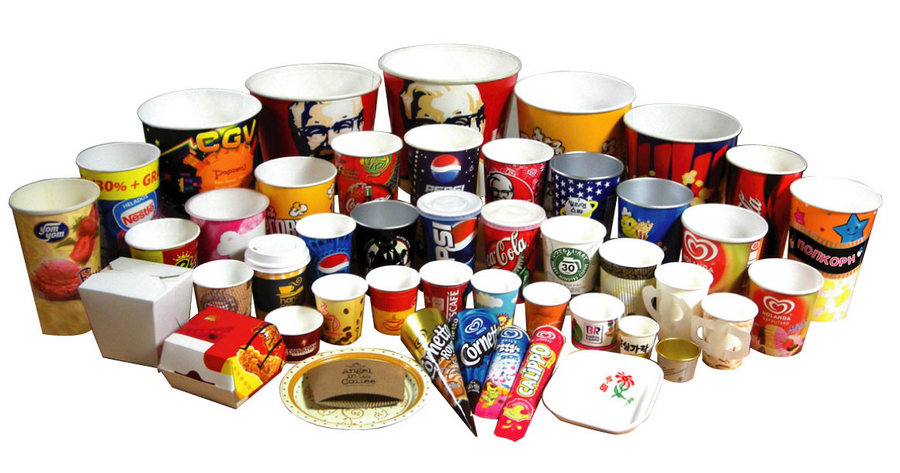
什么是纸杯一次性纸杯信息历史记录
什么是纸杯?
流行, 一次性杯子由 伺服杯机器, 称为纸杯.
纸杯很小, 由纸制成的一次性杯子, 通常涂有塑料或蜡以防止液体泄漏.
由于其重量轻且价格便宜,在一次性应用中很受欢迎.
这是更详细的细分:
- 材料: 主要由纸制成, 有塑料或蜡衬里以使其防水.
- 目的: 设计用于盛放饮料, 冷热皆宜.
- 一次性的: 仅供一次性使用,然后丢弃.
- 优点: 轻的, 便宜的, 并且易于回收.
- 替代方案: 其他一次性杯子材料包括塑料, 聚苯乙烯, 和泡沫.
- 环境影响: 在适当的条件下可生物降解和可堆肥, 纸杯通常有塑料衬里,这会使回收变得复杂.
什么是纸杯? 生物堆肥一次性生态纸杯
以下信息复制自维基百科.
A paper cup is a disposable cup made out of paper and often lined or coated with plastic or wax to prevent liquid from leaking out or soaking through the paper.
Disposable cups in shared environments have become more common for hygienic reasons after the advent of the germ theory of disease.
Due mainly to environmental concerns, modern disposable cups may be made of recycled paper or other inexpensive materials such as plastic.
History of Paper cup
Paper cups have been documented in imperial China, where paper was invented by the 2nd century BC.
The paper cups were known as chih pei and were used for the serving of tea.
They were constructed in different sizes and colors, and were adorned with decorative designs.
Textual evidence of paper cups appears in a description of the possessions of the Yu family, from the city of Hangzhou.
The modern paper cup was developed in the 20th century. In the early 20th century, it was common to have shared glasses or dippers at water sources such as school faucets or water barrels in trains.
This shared use caused public health concerns.
Histories
One notable investigation into their use was the study by Alvin Davison, biology professor at Lafayette College, published with the sensational title “Death in School Drinking Cups” in Technical World Magazine in August 1908, based on research carried out in Easton, Pennsylvania’s public schools.
The article was reprinted and distributed by the Massachusetts State Board of Health in November 1909.
Based on these concerns, and as paper goods (especially after the 1908 invention of the Dixie Cup) became cheaply and cleanly available, local bans were passed on the shared-use cup.
One of the first railway companies to use disposable paper cups was the Lackawanna Railroad, which began using them in 1909. By 1917, the public glass had disappeared from railway carriages, replaced by paper cups even in jurisdictions where public glasses had yet to be banned.
Paper cups are also employed in hospitals for health reasons. In 1942 the Massachusetts State College found in one study that the cost of using washable glasses, re-used after being sanitized, was 1.6 times the cost of using single-service paper cups.
These studies, as well as the reduction in the risk of cross-infection, encouraged the use of paper cups in hospitals.
Manufacture
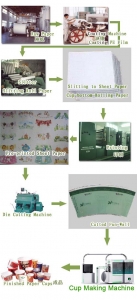
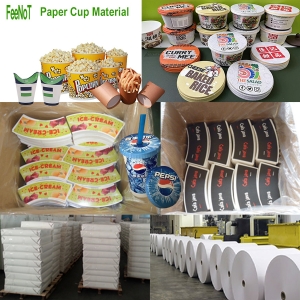
The base paper for paper cups is called “cup board”, and is made on special multi-ply paper machines. It has a barrier coating for waterproofing.
The paper needs high stiffness and strong wet sizing. The cup board grade has a special design for the cup manufacturing processes.
The mouth roll forming process requires good elongation properties of the board and the plastic coating.
A well formed mouth roll provides stiffness and handling properties in the cup. The basis weights of the cup boards are 170–350 g/m2.
To meet hygiene requirements, paper cups are generally manufactured from virgin (non-recycled) materials.
The one exception to this is when the paper cup features an extra insulating layer for heat retention, which never comes into contact with the beverage, such as a corrugated layer wrapped around a single-wall cup.
Waterproofing
Originally, paper cups for hot drinks were glued together and made waterproof by dropping a small amount of clay in the bottom of the cup, and then spinning at high speed so that clay would travel up the walls of the cup, making the paper water-resistant.
然而, this resulted in drinks smelling and tasting of cardboard.
Cups for cold drinks could not be treated in the same way, as condensation forms on the outside, then soaks into the board, making the cup unstable.
To remedy this, cup manufacturers developed the technique of spraying both the inside and outside of the cup with wax.
Clay and wax-coated cups disappeared with the invention of polyethylene (聚乙烯醇)-coated cups;
this process covers the surface of the board with a very thin layer of PE, waterproofing the board and welding the seams together.
In 2017, the Finnish board manufacturer Kotkamills launched a new kind of cup (food service) board which uses no wax or plastic for waterproofing,
and thus can be recycled as part of the normal paper and board waste stream, biodegraded, or even composted in small quantities.
In 2017, the Newport Beach, California, company Smart Planet Technologies, launched “reCUP” for the UK market, a recyclable paper cup using a polyethylene and mineral-blended coating branded EarthCoating, that is engineered to be recycled through traditional paper recycling systems.
Paper cups with EarthCoating are sold by Detpak, Huhtamaki, Linstol, and Pureco USA.
Printing on paper cups
1, Flexo printing:
Originally paper cups were printed using rubber blocks mounted on cylinders, with a different cylinder for each colour.
Registration across different colours was very difficult, but later flexography plates became available and with the use of mounting systems it became easier to register across the colours, allowing for more complex designs. Printing flexographic has become ideal for long runs and manufacturers generally use this method when producing over a million cups.
Machines such as Comexi are used for this, which have been adapted to take the extra large reels that are required by paper cup manufacturers.
Ink technology has also changed and where solvent-based inks were being used, water-based inks are instead being utilised.
One of the side effects of solvent-based inks is that hot drink cups in particular can smell of solvent, whereas water-based inks have eliminated this problem.
2, Offset printing:
Other methods of printing have been used for short runs such as offset printing, which can vary within a range from 10,000 到 100,000 杯子.
Offset printing inks have also been developed and although in the past these were solvent based, the latest soya-based inks have reduced the danger of cups smelling.
3, Digital printing:
The latest development is Direct-printing, which allows printing on very small quantities, typically from 1,000 杯子, and is used by companies including Brendos Ltd offering small quantities in short lead times.
4, Rotogravure printing:
Rotogravure can also be used, but this is extremely expensive and is normally only utilised for items requiring extremely high quality printing like ice cream containers.
Plastic material:
聚乙烯 (聚乙烯醇) is a petroleum-based coating on paper cups that can slow down the process of biodegrading of the paper it coats.
聚乳酸 (PLA) is a biodegradable bio-plastic coating used on some paper cups.
PLA is a renewable resource and is certified compostable in industrial composting facilities,
which means that when it biodegrades, it does not leave behind any toxic residues.
Although PLA-lined cups are the only paper cups which can be composted fully,
they can contaminate the waste stream, reportedly making other recycled plastics unsaleable.
盖子
Paper cups may have various types of lids.
The yogurt paper cups containers, for example, generally have two types of lids: heat-seal foil lids used for small “single serving” 容器, and 150–200 ml (5–7 US fl oz) plastic press-on, resealable lids used for large “family size” 容器, 250–1,000 ml (8–30 US fl oz), where not all of the yogurt may be consumed at any one time and thus the ability to re-close the container is required.
Hot drinks sold in paper cups may come with a plastic lid, to keep the drink hot and prevent spillage.
These lids have a hole through which to sip the drinks.
The plastic lids can have many features including peel back tabs, raised walls to protect the foam of gourmet hot drinks and embossed text.
In 2008, Starbucks introduced shaped plastic “splash sticks” to block the hole, in some of their stores, after customer complaints about hot coffee splashing through it.
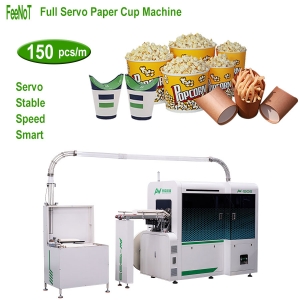
菲诺特纸杯机